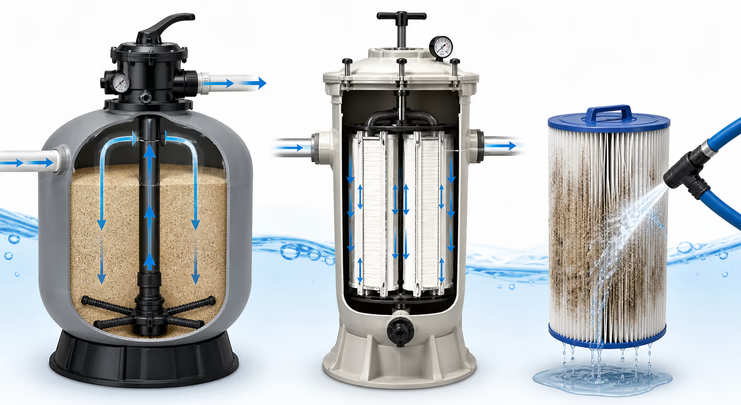
Whether you are a new pool owner or have just taken over your own maintenance for the first time, knowing how to backwash a pool is one of the most essential skills you can have.
Backwashing is a filter cleaning method that reverses the flow of water through your filter system, flushing out trapped debris and contaminants that build up over time.
In this guide, we cover everything you need to know: what backwashing is, which filter type you have, the full step-by-step process, how often to do it, when not to, and a few tips to help you avoid the most common mistakes.
What Is Backwashing a Pool?
Your pool filter works by pushing water through a filter medium, most commonly sand, which traps debris, dirt, oil, and contaminants as the water passes through it. Clean water is then returned to the pool. It’s a simple and effective system, but it has one unavoidable problem: over time, all that trapped waste builds up inside the filter medium, and the filter starts to clog.
As debris builds up, resistance through the filter increases. This usually shows up as higher pressure on the gauge and reduced water flow. If the filter is not cleaned, circulation and filtration become less effective, which can contribute to cloudy water and place unnecessary strain on the pump.
This is where the backwashing process comes in. Rather than pushing water through the filter in the usual direction, backwashing reverses the flow, lifting and agitating the sand, dislodging the trapped waste, and flushing it out through the waste line or backwash hose. Once the filter medium is clean, pressure drops back to its normal level and water flows freely through the system again.